

Faculty
- Online Urologist
- Treats Adults
- Video Visit Available
- Accepting New Patients
Icahn School of Medicine at Mount Sinai
New York, New York
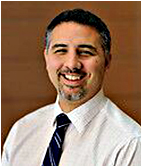
John Sfakianos, MD, is a Professor of Urology and Urologic Oncology at the Icahn School of Medicine at Mount Sinai. He specializes in treating cancers of the bladder and upper urinary tract, with a strong focus on urothelial carcinoma.
Dr. Sfakianos offers a full range of surgical options, using open, laparoscopic, and robotic techniques based on each patient’s needs. He performs robotic and open nephroureterectomies, partial and radical cystectomies, and creates urinary diversions such as ileal conduits, continent catheterizable pouches, and ileal neobladders. In addition to bladder and upper tract cancers, he treats kidney, prostate, testicular, and penile cancers.
His research centers on identifying new treatments for prostate and bladder cancer using mouse models. He has published more than 20 peer-reviewed articles, contributed book chapters on urothelial carcinoma, and serves as a reviewer for leading journals, including The Journal of Urology and Urologic Oncology.
Dr. Sfakianos earned his medical degree from the School of Medicine and Biomedical Sciences at Buffalo. He completed his internship and residency at the State University of New York Downstate Medical Center, followed by a Society of Urologic Oncology–accredited fellowship in Urologic Oncology at Memorial Sloan Kettering Cancer Center.
Expertise: Adrenocortical Carcinoma, Benign Prostatic Hyperplasia, Bladder Cancer, Cystectomy, Cystoscopy, Elevated PSA, Evaluation of Kidney Mass, Hematuria, Hydronephrosis, Kidney Cancer, Laparoscopy, Vasectomy Nephrectomy, Penile Cancer, Prostate Biopsy, Prostate Cancer, Prostate Laser Procedures
FACULTY SESSIONS
-
Friday, February 19th 11:50–1:00 pm
Bladder Session I – Single Port Female Cystectomy
PanelistCystectomy is the standard treatment for bladder recurrent, high‐risk non‐muscle‐invasive and localized muscle‐invasive urothelial carcinoma of the bladder. The da Vinci single-port instrument configuration allows the surgeon to work in narrow spaces. The instruments also have an extra joint providing an ‘elbow’, enhancing the triangulation experience around the target anatomy. The system features: a high‐definition three‐dimensional camera, an instrument guidance system, and enhanced instrument arm control.
-
Friday, February 19th 4:20–5:30 pm
Bladder Session II – Male Nerve Sparing Cystectomy with NeoBladder
PanelistMale Nerve Sparing Cystectomy with NeoBladder can improve early to urinary continence and erectile function.
-
Saturday, February 20th 11:50 am–1:00 pm
Bladder Session III – Male Cystectomy: Ileal Conduit
PanelistRobot-assisted radical cystectomy (RARC) is an increasingly common treatment approach for bladder cancer. RARC replicates the oncologic outcomes of open surgery while providing benefits of a minimally invasive approach. Additionally, an ileal conduit is feasible and can shorten operative time as compared to neobladder methods.
-
Saturday, February 20th 3:00–4:10 pm
Kidney Session IV – RPLND
PanelistRPLND can affect oncologic outcomes. It is possible that robotic approaches make these steps of the procedure technically easier and better patient experience.

To obtain additional details on Exhibiting at the symposium,
please contact Jennifer Berens, Gaffney Events
425.442.1314 | [email protected]
Presented by Mount Sinai Department of Urology in collaboration with Society of Urologic Robotic Surgeons and Endourological Society